
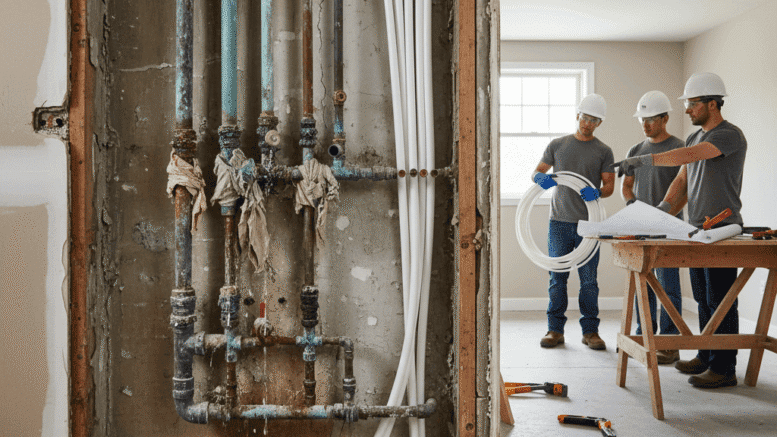
Repiping a home is a major decision that affects comfort, safety, and long term costs. Many homeowners delay replacement until a crisis forces action. Recognizing the signs that repiping is needed lets you plan the work on your schedule and protect your property from damage and frequent repairs.
This article helps you identify clear triggers for full or partial pipe replacement. You will find practical examples, cost considerations, material choices, and what to expect during the job. The goal is to give you enough information to talk confidently with a licensed plumber and make a plan that fits your home.
Common warning signs that you may need repiping soon
Several everyday problems point to failing pipe systems. If you see multiple signs at once you should consider a thorough inspection. Early action can prevent a catastrophic leak and reduce long term repair bills.
- Persistent rusty or discolored water coming from multiple taps
- Low water pressure throughout the house that does not respond to simple fixes
- Visible leaks in walls or ceilings that appear repeatedly after repairs
- Sudden increases in water bills without changes in usage
- Water that tastes metallic or otherwise unusual
- Staining on sinks, tubs, and fixtures from iron or copper deposits
How pipe age and materials affect replacement timing
Not all pipes fail at the same rate. The material determines average service life and common failure modes. Knowing what material is in your walls helps estimate replacement urgency.
- Galvanized steel pipes: Often installed in homes built before the 1960s. They corrode from the inside causing scale buildup and reduced flow. Failure often presents as rusty water and frequent leaks.
- Polybutylene: Used in the 1970s through 1990s. Prone to cracking and sudden failure at joints. Insurance for homes with this material can be limited.
- Lead: Rare today but serious if present. Health risks from lead leaching make replacement high priority in older homes.
- Copper: Long lasting when installed and maintained. Corrosion can still occur in certain water chemistries or if improper fittings were used.
When water quality problems point to failing pipes
Water discoloration and deposits are not only unsightly. They indicate internal corrosion and material breakdown that can affect health and fixtures.
- Brown or orange water suggests rust inside pipes and can stain laundry and fixtures
- White flakes or cloudiness might mean scale or particulate from degrading pipe linings
- Unexpected metallic taste can be a signal of heavy metal contamination in older plumbing
Tests and inspections to consider
Simple in home tests and professional lab tests both have value. A licensed plumber can take a water sample and inspect visible piping with a camera in accessible sections to estimate the scope of internal corrosion.
Frequent leaks, repair history, and repair cost analysis
Repeated spot repairs can add up. Track the frequency and locations of past repairs to judge whether ongoing patching is cost effective. A few examples illustrate typical scenarios.
- A home with three or more separate leaks repaired over five years often sees replacement costs become comparable to continued repairs within a decade
- A leaking hidden pipe that causes drywall and flooring damage raises indirect costs far beyond the plumbing bill
- Insurance payouts may cover sudden damage but not deterioration from age so expect higher out of pocket costs if pipes are old
Tip Keep a simple log of leak dates, repair descriptions, and bills. That record helps a plumber offer a clear recommendation and provides leverage when comparing quotes.
Choosing the right piping material for replacement
Two common modern choices are cross linked polyethylene and copper. Each has trade offs in price, installation style, and long term performance. Consider household needs and the local water chemistry when deciding.
Advantages of cross linked polyethylene
Cross linked polyethylene is flexible, quiet, and usually less expensive to install. Its flexibility makes it especially useful in retrofit work because runs can be routed with fewer joints. It does not corrode like metal and adapts well to shifting building structures.
Advantages of copper
Copper has a long history in plumbing. It resists UV and high temperatures and can last many decades when water chemistry is friendly. Some homeowners prefer copper where visible piping is exposed. Copper fittings and soldering require experienced installers to avoid leaks.
If you want a reliable estimate and local options, visit a regional plumbing service page that explains replacement methods in detail whole home repiping
What a repiping project typically looks like and how long it takes
Understanding the sequence of work reduces stress on homeowners. A full house replacement normally follows these steps
- Initial inspection and timeline estimate based on house size and access points
- Choosing materials and signing a scope of work with the plumber
- Shutting off water and isolating required areas for safety
- Running new lines from the main supply to fixtures and appliances
- Pressure testing the new system to check for leaks
- Restoring access points and finishing any required drywall or cabinet work
Typical duration depends on home size. A small bungalow may be completed in one to two days. A larger two story house often takes several days to a week. Factors that add time include limited access to walls, complex radiator or boiler connections, and the need to obtain permits.
Permits, inspections, and hiring a qualified plumber
Replacing plumbing in a home usually requires local permits and inspections. A licensed plumber will handle permit submission, code compliant materials, and scheduling inspections. Ask for proof of license and insurance before work begins.
- Get at least two written estimates that break down materials, labor, and restoration work
- Request a timeline and a clear description of what areas will be opened and how they will be repaired
- Ask about warranties on workmanship and materials and get those terms in writing
Tip During the estimate visit point out any finished areas, custom cabinetry, or historic features you want to protect. Experienced crews can plan protective covers and limit demolition to reduce restoration costs.
Preparing your home and family for repiping work
Repiping can be disruptive. A little preparation makes the process smoother and reduces frustration. Plan to move fragile items, clear access to utility areas, and arrange alternate water sources if needed.
- Create a staging area for tools away from living spaces
- Identify temporary wash and beverage stations elsewhere or arrange to stay with family or friends for large jobs
- Label shutoff valves so everyone knows how to stop water in an emergency
Repiping is a significant investment that protects your home and reduces surprise repairs. If you see recurring leaks, rusty water, or many past repairs the scales often tip toward replacement being the more economical long term choice. Talk with a licensed plumber about inspections and timelines and request detailed estimates that include restoration of any walls or finishes. Planning and clear communication with the contractor reduce surprises and help the job finish on schedule.
Ready to take the next step Schedule an inspection with a local plumbing service to get a tailored assessment for your home. A professional will explain material options, expected timelines, and a written estimate so you can compare costs and decide with confidence. Replacing aging or failing pipes protects your property value and daily comfort. Contact a licensed plumber today to arrange an on site evaluation and get a clear plan for moving forward.